Written by

Eric
Share this article

.svg)
Subscribe to updates
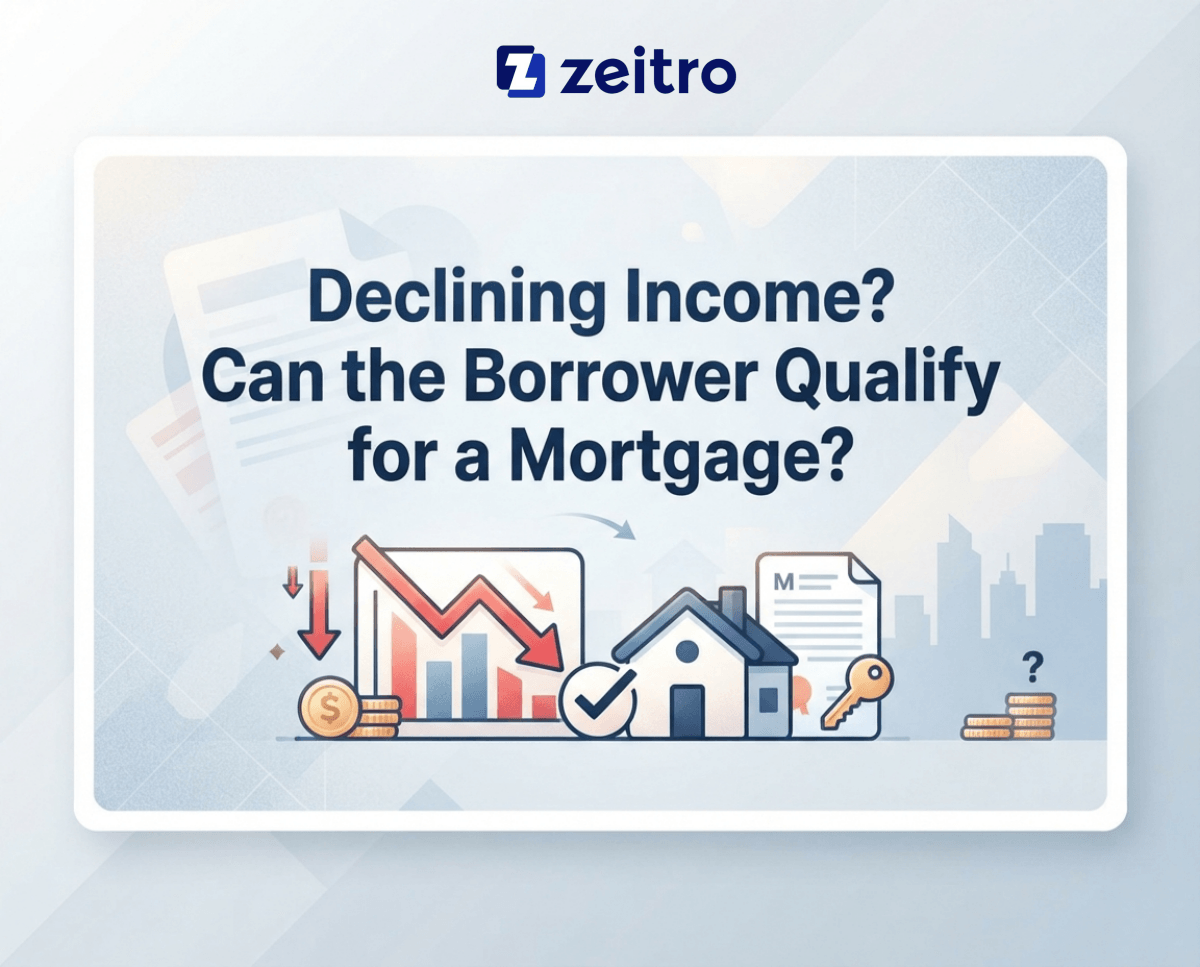
Whenever a loan file lands on my desk with a recent tax return or year-to-date pay stub showing lower earnings than the previous year, panic often sets in for the borrower. But a drop in revenue is not an automatic dealbreaker. As loan officers, our task is to determine whether earnings have leveled off, document why the decrease occurred, and apply the correct underwriting calculations.
Key Takeaways
- Approval remains achievable if you can document that the downward trend has halted and earnings have stabilized.
- Lenders typically set aside standard two-year averaging and qualify you using the lower, most recent earnings baseline.
- A year-over-year earnings drop exceeding 20% often triggers heightened scrutiny and additional documentation under FHA and conventional guidelines, and may lead to manual underwriting or stricter lender overlays depending on the overall risk profile.
- Ongoing, un-stabilized revenue slides generally make that income ineligible for qualifying under conventional and most government-backed programs until a clear floor is established.
- Non-QM alternatives like bank statement loans offer practical backup plans when tax returns show paper losses.
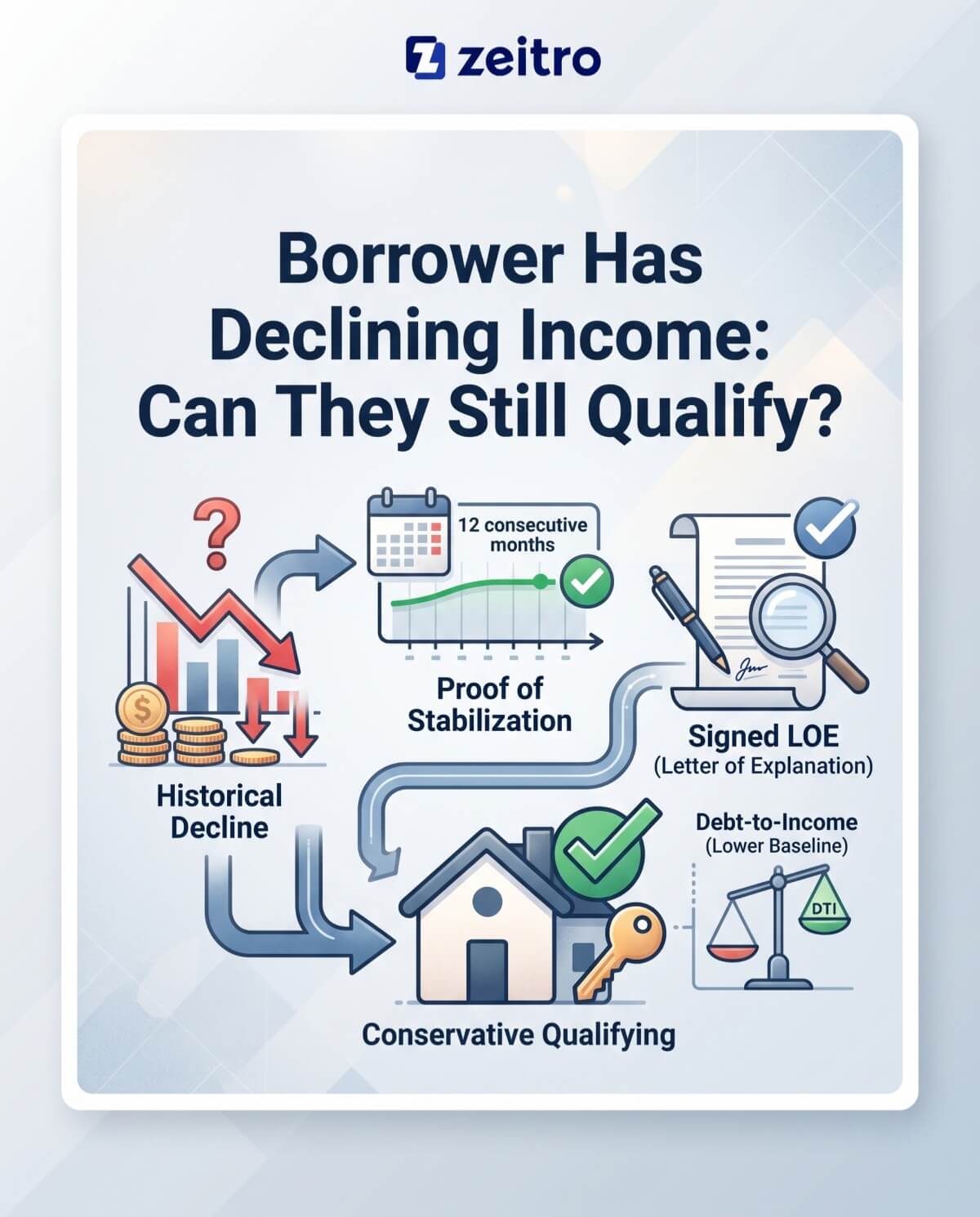
Borrower Has Declining Income: Can They Still Qualify?
Yes, you can still secure a mortgage with lower earnings, though underwriters will evaluate your file under a microscope. In my experience closing complex files, the entire decision hinges on one critical distinction: is your revenue still actively falling, or has it established a reliable floor?
To approve a file with reduced earnings, lenders require concrete verification:
- Proof of stabilization: Typically, documenting around 12 consecutive months of steady cash flow at the new baseline is preferred, though some lenders may consider shorter periods if other risk factors are strong.
- A signed Letter of Explanation (LOE): Clarifying that the drop stemmed from a one-off or external issue rather than structural insolvency.
- Conservative qualifying capacity: Proving your debt-to-income ratio remains acceptable using strictly the lower current figures.
How Lenders Calculate Declining Income?
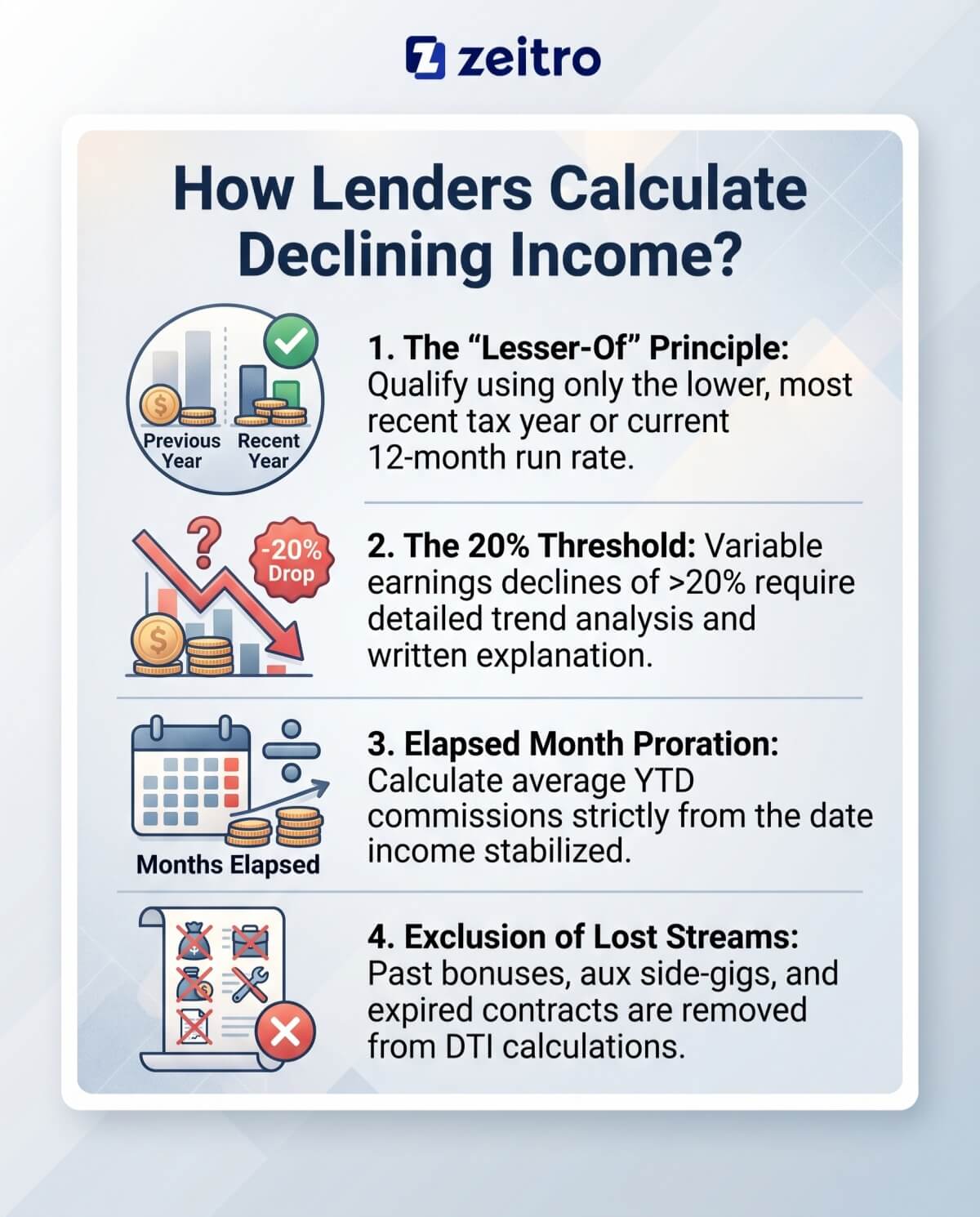
When income trends downward, standard multi-year averaging goes out the window. Underwriters shift to conservative guidelines to protect against ongoing default risk:
- The "Lesser-Of" Principle: Instead of blending a strong past year with a weaker recent year, lenders qualify you solely using the lower, most recent tax year or current twelve-month run rate.
- The 20% Threshold: If self-employment or variable earnings drop by more than 20% year-over-year, FHA and many conventional programs require more detailed trend analysis, a clear explanation of the decline, and evidence of stabilization. Some lenders may then require manual underwriting or additional reserves as part of their overlays.
- Elapsed month proration: For decreasing commissions or overtime, underwriters take the year-to-date total and divide it strictly by the months elapsed since the earnings leveled off.
- Exclusion of lost streams: Past discretionary bonuses, auxiliary side gigs, or expired contracts that vanished recently are completely stripped from qualifying debt-to-income calculations.
Key Factors That Determine Mortgage Approval
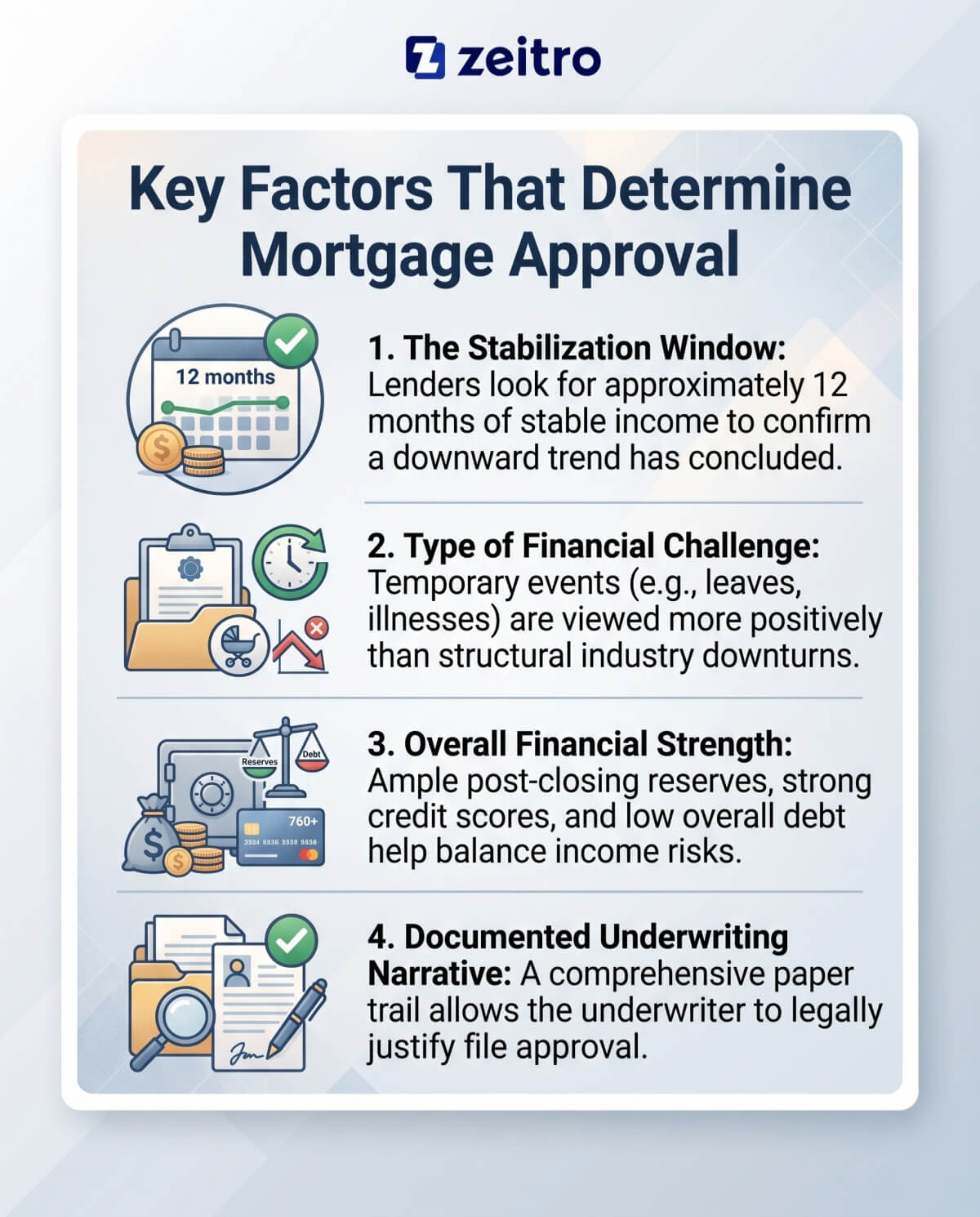
Securing an approval on a downward earnings trend requires building a compelling, well-documented narrative for the underwriter:
- The stabilization window: Showing roughly 12 months of flat or rebounding income generally gives lenders confidence that the slide has ended, though specific requirements vary by program and lender overlay.
- Nature of the setback: Temporary disruptions like maternity leave, short-term medical events, or one-off equipment purchases are viewed much more favorably than structural industry downturns.
- Compensating financial strengths: Carrying several months of post-closing liquid reserves, holding excellent credit scores, and keeping low overall debt balance out risk.
- Underwriter written justification: Having a clean paper trail that allows the underwriter to legally defend your file to secondary market investors.
Alternative Options If Traditional Approval Fails
If standard agency guidelines reject your file due to strict tax return averaging, several tactical alternatives can keep your transaction alive:
- Recalibrate purchasing power: Adjust your loan request downwards or put down additional cash to fit the lower qualifying baseline.
- Switch to Non-QM solutions: Self-employed borrowers may qualify based on 12- or 24-month bank statements that analyze gross business deposits, rather than relying solely on tax-return net income.
- Enlist a co-signer: Bring on a non-occupant co-borrower with stable, documented W-2 wages to absorb excess debt ratios.
- Leverage asset depletion: Convert significant liquid assets, stock portfolios, or retirement accounts into a recognized monthly qualifying stream to offset the salary gap.
FAQs About Declining Income on Mortgage
Q1. How does Fannie Mae treat declining commission income?
Fannie Mae requires lenders to confirm that decreasing commission income has stabilized before it can be used for qualification. When the trend is downward, lenders generally must use the lower of the two-year average or the most recent year's income, and may also rely on the most recent 12-month period once stabilization is documented. In some cases, year-to-date income divided by elapsed months can be used to estimate the current stabilized level, but it is not a blanket replacement for the two-year analysis.
Q2. What should be included in a Letter of Explanation (LOE) for declining income?
Your LOE must clearly state the specific, temporary cause of the decrease, provide independent third-party documentation supporting the claim, and explain why the event has concluded. It must also confirm that your earnings have leveled off and are reasonably expected to continue. Many lenders look for an expectation of at least three years of continuity, though specific requirements can vary by program and lender.
Q3. Does a 20% drop in self-employed income automatically disqualify an FHA loan?
No. A decline of 20% or more is treated as an adverse trend under FHA guidelines and typically requires additional documentation, a clear explanation of the cause, and evidence that income has stabilized or is increasing over the most recent 12 months. Many lenders will then underwrite the file more conservatively, and some may require manual underwriting depending on their overlays and the overall risk profile. Qualifying income will generally be based on the reduced, stabilized earnings.
Q4. What happens if a borrower's income is experiencing an ongoing, un-stabilized decline?
If your pay stubs, profit-and-loss statements, or bank statements show a continuous downward trajectory with no evidence of leveling off, conventional and most government loan programs will typically consider that income ineligible for qualifying, though borrowers may still be able to use other verified income sources or alternative structures.
Final Word
A dip in earnings will undoubtedly make mortgage underwriting tighter, but it does not mean your homeownership goals are over. The secret lies in anticipating underwriter questions, verifying that earnings have leveled off, and structuring your paperwork proactively. Before you submit a blind application, sit down with an experienced loan officer to calculate your real baseline and map out the cleanest path to an approval.
Disclaimer: This article is for general informational purposes only and does not constitute official guidance from Fannie Mae, FHA, HUD, or any specific lender. Underwriting guidelines and overlays can vary by institution and change over time. Borrowers should consult a licensed loan officer and review current program guidelines for their specific situation.
People Also Read
- Can It Be Used If Borrower Has One Year of Commission Income?
- Can a Borrower with Less than Two Years Self-Employment be Qualified?
- Borrower Changed Jobs Three Months Ago: Can They Qualify?
- Can I Use Pension Income to Qualify for a Mortgage?
- What to Do When Having a Self-Employed Borrower with Declining Income?